


Water Chiller Selection & Sizing Guide|Industrial Process Cooling for Plastic Processing
URL slug: https://www.aliciaplasticmachine.com/pages/the-selection-and-sizing-guide-of-industrial-water-chillers
Target:B2B industrial buyers(injection molding, extrusion, blow‑molding, plastic processing plant engineers, procurement managers)
Complete water chiller selection and sizing guide for injection molding, extrusion & blow molding. Learn cooling capacity calculation, delta‑T, flow rate and pick the right air‑cooled / water‑cooled chiller for your production line.
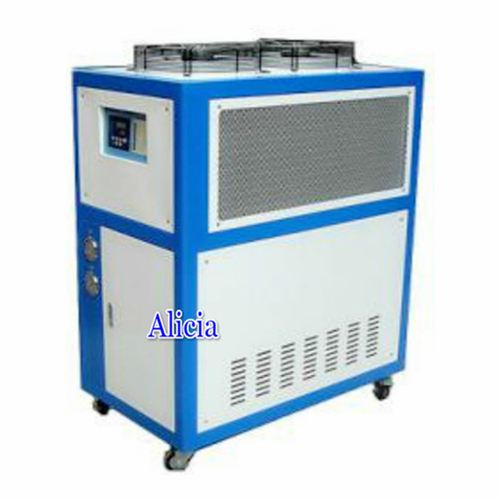
Water Chiller Selection and Sizing Guide
Proper water chiller selection and accurate sizing directly determine mold temperature stability, product quality, cycle time and overall production cost for plastic processing plants. An undersized chiller leads to overheating molds, longer cycle times and high reject rates; an oversized unit wastes capital investment and raises continuous operating power consumption.
This practical guide walks plant engineers and procurement teams through core principles, calculation formulas, key selection parameters, common application scenarios and typical pitfalls when choosing industrial water chillers for injection molding, extrusion, blow‑molding and other plastic auxiliary cooling processes. Whether you replace an old cooling unit or build a brand‑new production line, follow this workflow to match a well‑fit water chiller solution.
Core Parameters You Must Confirm Before Sizing a Water Chiller
Before calculating required cooling capacity, collect the following real‑site working conditions data. Missing any item will cause wrong chiller model selection.
1.1 Process Heat Load & Production Throughput
- For injection molding: hourly plastic material output (kg/h), plastic resin type, melt‑to‑ejection temperature difference, hot runner heat consumption (if equipped)
- For extrusion: cooling tank heat load, extruder barrel auxiliary cooling requirement, line running speed
- For tank / reactor cooling: tank volume, target cool‑down time, circulating fluid medium (pure water or water‑glycol mixture)
1.2 Temperature Requirements: Inlet & Outlet Delta‑T (ΔT)
Delta‑T means temperature difference between chiller chilled water outlet returning back into chiller inlet, which is one critical factor for cooling‑capacity calculation. Recommended delta‑T reference for plastic industry:
| Application | Suggested Delta‑T |
|---|---|
| Precision / optical / medical injection molding | 3‑5℃ |
| General‑purpose injection molding | 5‑6℃ |
| Extrusion water bath cooling | 8‑12℃ |
Note: Smaller delta‑T needs larger water flow rate to remove the same heat load; large delta‑T reduces required flow but may bring uneven mold cooling risk.
1.3 Required Chilled Water Supply Temperature
- Standard industrial chiller: 5‑25℃ chilled water output
- Low‑temperature glycol chiller: below 5℃ for special low‑temp mold process If target supply water temperature deviates far from standard condition, you need to derate chiller nominal cooling capacity accordingly.
1.4 On‑site Installation Environment
- Ambient maximum summer temperature (critical for air‑cooled chiller performance derating)
- Water supply & drainage condition (decide air‑cooled or water‑cooled type)
- Available power supply voltage & frequency
- Pump head requirement considering pipe length, height difference and filter resistance
Water Chiller Sizing Calculation Formulas & Practical Examples
Two mainstream calculation approaches are widely adopted for plastic‑processing water chiller sizing: heat‑balance formula based on material throughput, and flow‑rate & delta‑T formula for circulating water loop.
Method One: Calculate Cooling Load From Plastic Material Throughput
Q (kcal/h) = W × Cp × ΔT × Safety‑Factor
- Q: total required cooling load (kcal/h)
- W: hourly processed plastic material weight (kg/h)
- Cp: specific heat of plastic resin
- ΔT: temperature drop from melt to finished‑part ejection
- Safety‑Factor: 1.3 ~1.8 (take higher value for multi‑mold shared chiller or high‑ambient‑temp workshop)
Unit conversion: Cooling capacity(kW) = Q(kcal/h) ÷ 860 1 Refrigeration Ton(RT) ≈ 3.517 kW
Calculation example: PP injection molding workshop, hourly output 120 kg PP parts, melt‑ejection temp difference 180℃, Cp=0.48 kcal/kg·℃, safety factor=1.4 Q=120 × 0.48 ×180 ×1.4 = 14515 kcal/h ≈16.88 kW ≈4.8 RT We should select chiller model with nominal cooling capacity above calculated value.
Method Two: Flow‑Rate & Delta‑T Calculation for Water Circuit
Suitable when you know existing circulating water flow data:
Q(kW) = Flow(L/min) × 4.186 × ΔT(℃) ÷ 60
Example: measured water flow 40 L/min, delta‑T 5℃ Q =40 ×4.186 ×5 ÷60 ≈13.95kW
Why Must We Add Safety Factor?
Nominal chiller cooling capacity is tested under lab standard working condition. Real‑world factors including high summer ambient temperature, pipe heat loss, unexpected peak heat load, filter clogging will reduce actual output capacity. Always apply 15‑20% safety margin at least instead of buying chiller exactly matching theoretical computed value.
Air‑Cooled VS Water‑Cooled Water Chiller: How To Choose Type
After confirming required cooling capacity, next decision: air‑cooled chiller or water‑cooled chiller.
Air‑Cooled Industrial Water Chiller
✅ Advantages
- No cooling tower & circulating cooling water system required; easy installation, less auxiliary equipment investment
- Suitable for factory site without stable industrial water source; mobile‑friendly for temporary production line
- ❌ Disadvantages
- Cooling capacity will drop when summer ambient temperature rises high
- Occupies outdoor ventilation space; higher noise level
Best fit: small‑to‑medium cooling capacity, injection molding workshops with limited water supply, decentralized multiple small cooling points.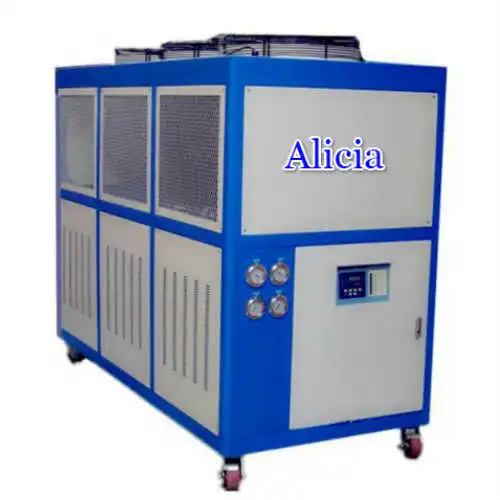
Water‑Cooled Industrial Water Chiller
✅ Advantages
- Stable cooling performance regardless of ambient temperature; higher energy efficiency for large tonnage
- Compact indoor unit footprint; lower noise for chiller main body
- ❌ Disadvantages
- Must match cooling tower and cooling water pump system; higher initial auxiliary‑system investment
- Needs regular water treatment to avoid scale and fouling inside condenser
Best fit: large‑scale extrusion plant, central‑cooling system serving multiple machines, continuous 24‑hour non‑stop production.
Critical Selection Checkpoints Beyond Cooling Tonnage
Many buyers only compare chiller cooling capacity tonnage while ignoring these points, resulting in unstable long‑run operation.
Circulating Pump & Pressure Head
Check pump flow and lift head, not only chiller cooling power. Long pipeline, multi‑mold parallel loops need sufficient pump head to guarantee each mold cavity obtains designed water flow rate. Insufficient pump head will cause poor cooling effect even though chiller tonnage is enough.
Heat‑Exchanger Material
- Standard fresh‑water cooling: shell‑and‑tube with copper heat‑exchanger
- If using water‑glycol, or water with poor water quality: suggest anti‑corrosion 304 stainless steel heat exchanger to extend service life.
Control System & Temperature Precision
- General production: digital PID temperature controller, ±1℃ control accuracy meets demand
- Optical, medical high‑precision plastic parts: choose PLC controlled chiller with ±0.5℃ or tighter temperature stability, alarm function for flow failure, over‑high temperature and low water level.
Component Brand & After‑sales Support
Key components include compressor, contactor, thermal protector, flow switch. Reliable international brand core parts greatly reduce breakdown risk. Confirm local spare‑parts supply and warranty policy before placing order.
Sizing Mistakes Frequently Seen in Plastic Factories
- Select chiller purely by injection‑machine clamping tonnage, without calculating real heat load. Different plastic resins generate totally different heat even with same injection machine size.
- Ignore ambient‑temperature derating for air‑cooled chiller: nominal capacity is tested at 35℃ ambient; performance drops sharply above 40℃ summer weather.
- Too‑big delta‑T setting pursuing small chiller size: bring non‑uniform mold surface temperature, warping & deformation plastic‑part defects.
- One chiller over‑loaded for excessive number of molds without safety margin: works fine in winter, insufficient cooling once summer comes.
- Neglect pump head requirement: enough cooling capacity, but inadequate water flow reaching mold cavities.
Application Reference Table for Common Plastic‑Processing Scenarios
| Production Scenario | Preferred Chiller Type | Key Reminder |
|---|---|---|
| General injection molding (PP, PE, ABS) | Air‑cooled chiller for small‑medium capacity | Delta‑T keep at 3‑6℃ |
| Optical / medical precision injection | Air‑cooled or water‑cooled; high‑precision control | Strict stable supply‑water temperature, large flow, small delta‑T |
| Pipe / profile extrusion cooling tank | Water‑cooled for large throughput | Calculate total bath heat load |
| Blow‑molding production line | Air‑cooled unit for decentralized layout | Watch for peak heat load during mold opening & closing |
| Multi‑machine central cooling system | Water‑cooled chiller + cooling‑tower | Add buffer water tank for load fluctuation |
Frequently Asked Questions about Water Chiller Selection & Sizing
Q1: Can I use one larger chiller to serve multiple injection‑molding machines?
A: Yes, building a central cooling system. You must calculate total peak simultaneous heat load, add safety factor and install buffer water tank. Do not simply sum every individual theoretical load, consider diversity factor when machines do not run at full load simultaneously.
Q2: What happens if I buy an undersized water chiller?
A: Molds cannot reach target temperature, plastic parts suffer warpage, shrinkage mark, high reject rate; longer molding cycle reduces output; chiller compressor runs continuously under overload condition, shortening compressor service life.
Q3: Is bigger always better for chiller tonnage?
A: No. Excessively oversized chiller increases purchasing cost, leads to frequent compressor on‑off cycling, unstable water‑temperature fluctuation and higher power‑consumption. Select next‑step‑up model above your calculated load with reasonable safety margin.
Q4: When do I need glycol‑type low‑temperature chiller?
A: When your required chilled‑water supply temperature is below 5℃. Add proper proportion glycol anti‑freeze fluid, and remember to derate chiller cooling capacity for glycol working medium.
Get Professional Water Chiller Sizing Support
If you are confused about heat‑load calculation or comparing multiple supplier quotations, prepare these information and send inquiry to our engineering team:
- Machine list: injection‑machine / extruder model number, quantity
- Hourly output for each resin type
- Required chilled‑water supply temperature, expected delta‑T
- On‑site condition: max summer ambient temperature, water‑supply condition, power‑supply specification
Our technical team will help you finish cooling‑capacity calculation and recommend matching air‑cooled / water‑cooled water chiller solution for your plastic‑processing production line.


